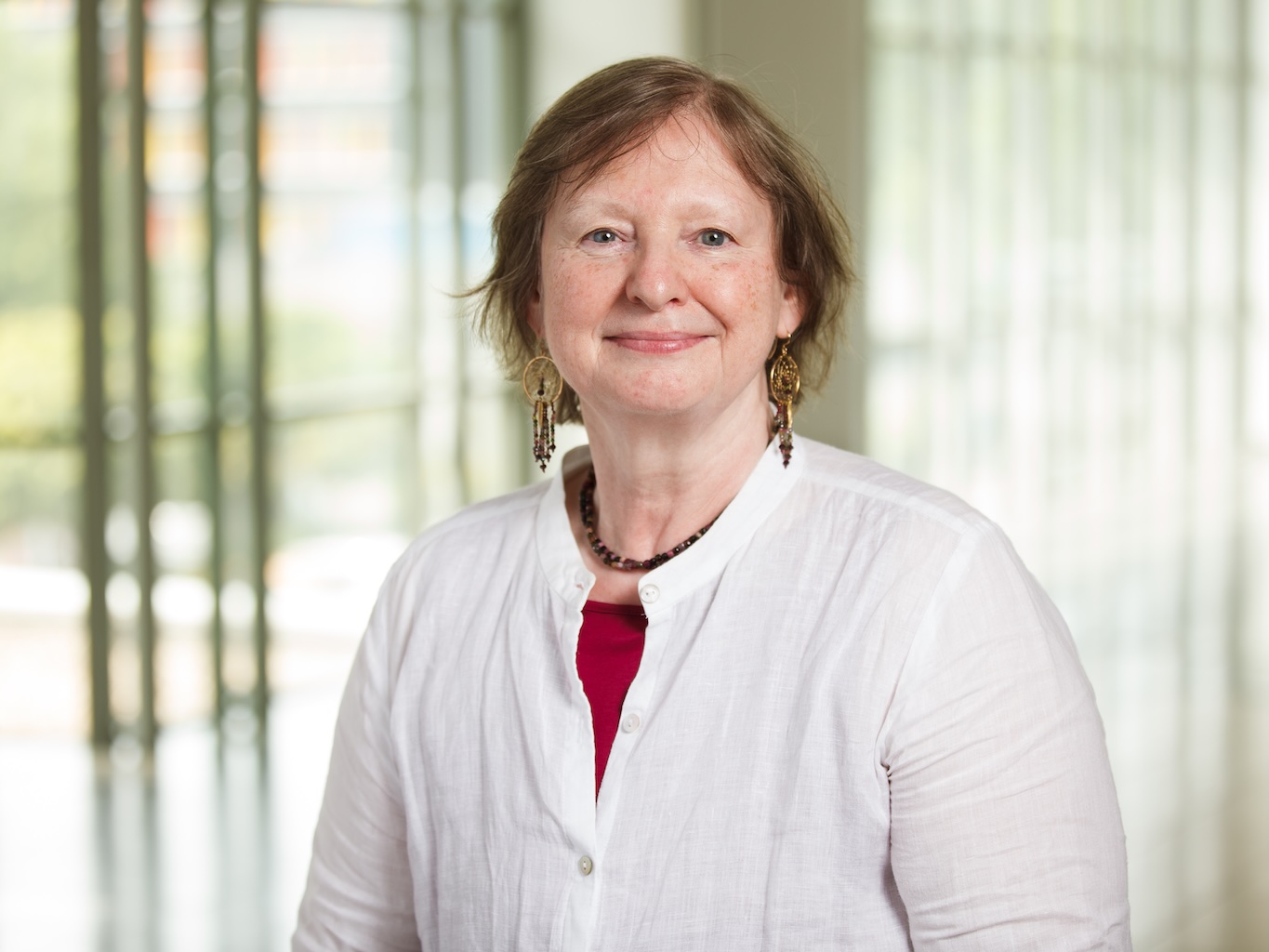
On 31 March 2026, University College London will be hosting a Festschrift Symposium for Professor Angela Sasse, to recognise and celebrate her contributions to the field of Computer Science and human-centred security specifically. We are seeking scientific contributions to a volume that will be presented at the event. Submissions will be selected by a committee of her students and colleagues, with accepted papers being made available online following the event.
M. Angela Sasse is the professor of human-centred technology at UCL, and of human-centred security at Ruhr-University Bochum in Germany. She is a pioneer of usable security research and interdisciplinary security research. In recent years, her focus has been empirical research on how large organisations manage cybersecurity risks, in particular in relation to human capital. In 2018 she moved to Ruhr University Bochum in Germany, where she is a speaker of the Exzellenzclusterproject CASA, the interdisciplinary graduate school SecHuman, and the BMBF-funded DigiFit project. She was elected Fellow of the UK Royal Academy of Engineering (2015) and the German National Academy of Sciences "Leopoldina" (2023).
Submissions are limited to eight pages in LNCS format excluding bibliography and any appendices, and maximum ten pages total (shorter submissions are encouraged). Authors will retain copyright to their submission, and grant permission for the work to be published under a Creative Commons license. Submissions should be on a topic inspired by, relating to, or commenting on the broad area of Professor Sasse's research. The theme of the event will be "Users Are Not The Enemy" but this should be interpreted as a springboard for ideas rather than as a constraint.
Submissions should be made in PDF format by 31 December 2025 at our Microsoft CMT page.
It is expected that at least one author of each accepted paper will attend the Festschrift Symposium to present their work. If this will not be possible, please contact the organizers.
The festschrift will be published and made available in print, digital, and PDF formats. Authors retain copyright of their work and must publish their contributions under a Creative Commons 4.0 license of their choice.
Authors of accepted contributions must sign a license agreement granting us the non-exclusive right to publish, distribute, and sell their work as part of the festschrift. One co-author needs to sign and submit the agreement on behalf of all authors.
Note: If some, but not all, of the authors are employees of the U.S. federal government, the form must be signed by one of the authors who is not an employee of the U.S. federal government.
The event will be held in University College London on 31 March 2026. Further details will be announced in due course. Sign up for updates below to be notified when these are available.
| Time | Session |
|---|---|
| 09:00 – 09:30 | Registration & Coffee |
| 09:30 – 09:45 | Opening Remarks |
| 09:45 – 11:00 | Session 1: Foundations
Papers (6)
|
| 11:00 – 11:30 | Morning Coffee Break |
| 11:30 – 12:45 | Session 2: Education and Behaviour
Papers (6)
|
| 12:45 – 14:00 | Lunch Break |
| 14:00 – 15:00 | Session 3: Operational Practice
Papers (5)
|
| 15:00 – 15:30 | Afternoon Tea Break |
| 15:30 – 16:20 | Session 4: AI, Ethics & Societal Values
Papers (4)
|
| 16:20 – 17:00 | Closing Plenary / Q&A |
| 17:00 – 18:30 | Reception |
The event is only for registered attendees. To register, please request your ticket through the UCL online store. Thanks to support from UCL, registration is free. Attendees may optionally purchase a copy of the proceedings for an additional £10. Registration closes on 24 March 2026.
To receive updates and reminders about Sassefest (e.g. when submission instructions are available, registration open, etc.), fill out your email address on the form here: https://forms.cloud.microsoft/e/3Td67rmrKa.
We also extend our thanks to Dan Ristea for his diligent work as the publication chair. Special thanks are due to Lizzie Howie for her cover design and administrative support throughout the planning process. The Microsoft CMT service was used for managing the peer-reviewing process for this conference. Finally, we are deeply grateful to the UCL Department of Computer Science for their generous support and for hosting this Festschrift Symposium.
You can contact us at: sassefest@cs.ucl.ac.uk.